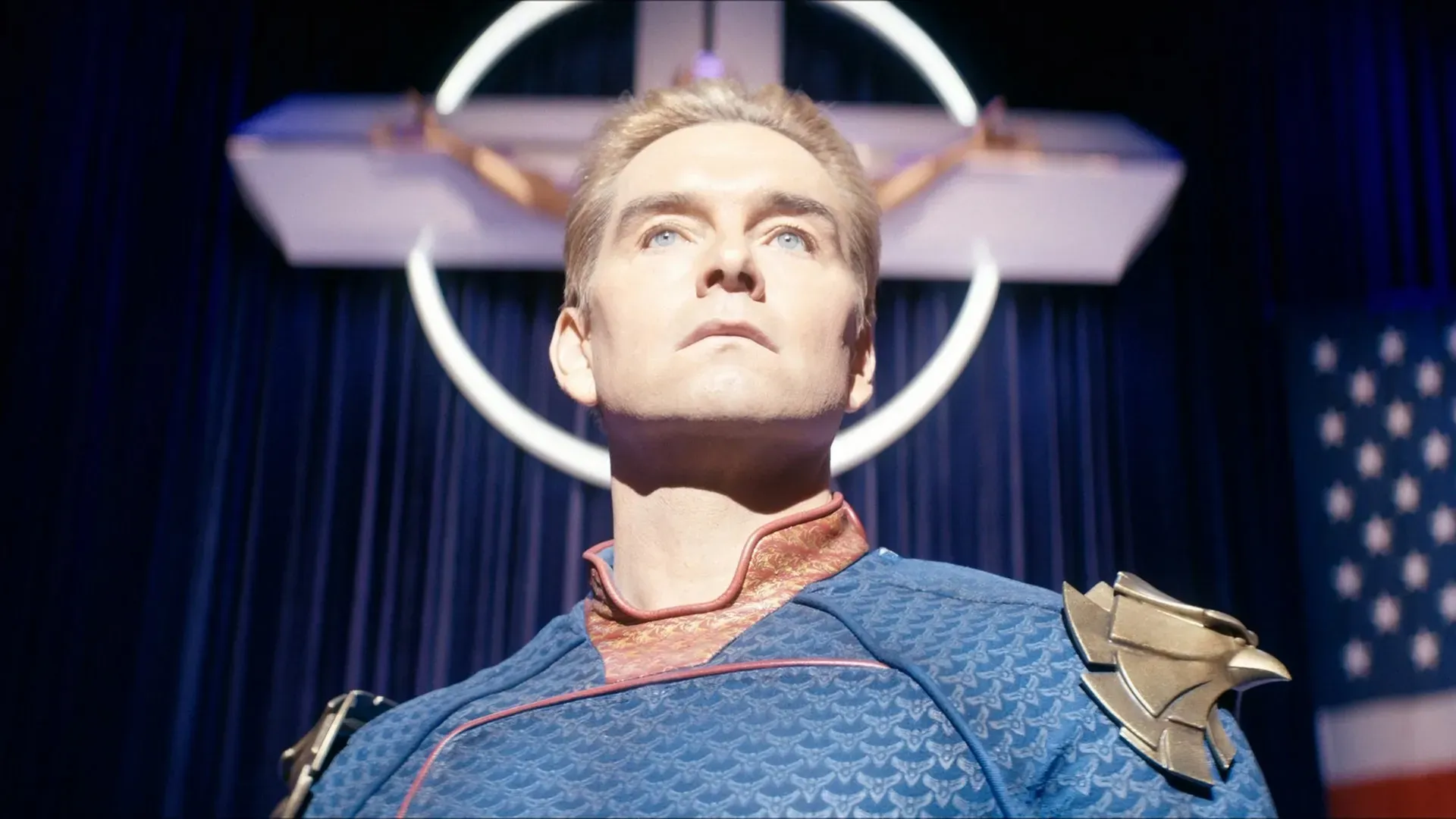
The fourth episode of season five of The Boys, titled "King of Hell", opens with a scene that immediately sets the tone for the entire episode: Firecracker visits Homelander, and the moment he catches Soldier Boy's scent on her, he instantly shifts to a far more important subject — his own godhood. "Not serving the Lord. Being the Lord," he says with the kind of certainty that suggests this revelation has been inevitable for a long time. Valorie Curry's face conveys an entire spectrum of emotions — from horror to the understanding that arguing is pointless. The actress sells the entire moment without uttering a single word, and it is more than enough. What makes it particularly effective is the fact that Firecracker, a devoted evangelical believer, is chosen as the chief herald of this new cult. In the episode's closing scene, Oh Father solemnly announces the creation of the Democratic Church of America, with Homelander positioned as its Prophet.
Fort Harmony, The Shining, and The Last of Us on a smaller scale
In search of traces of V1, The Boys arrive at Fort Harmony — a decommissioned Vought facility. On the way there, they stumble upon mutilated animal carcasses and decomposing bodies. Nothing about the place suggests a positive outcome, but they have no choice. Very quickly, however, the episode becomes less about the search itself and more about the psychological self-destruction of its characters. A fungus infecting everyone around them and amplifying aggression serves as a convenient narrative device for dragging old grudges and tensions to the surface. MM lashes out at Butcher, Kimiko quite literally tries to kill Hughie, while Hughie behaves as though he has been bottling up a nervous breakdown for all five seasons. And while the concept works as a mechanism for emotional escalation, the problem is that we have already seen most of these arguments before. The series once again cycles through the same conflicts between its characters: Butcher manipulates people again, MM is emotionally exhausted again, Hughie is once more trying to stop the team from tearing itself apart. The writers seem afraid to truly alter the group dynamic, which often creates the feeling of a dramatic loop the show simply cannot escape.
— Okay, so like The Last of Us?
— No, that is just The Walking Dead with mushrooms.
The creators quite literally merge Stanley Kubrick's The Shining with references to the video game franchise The Last of Us by introducing a fungal infection, while centring the story around an abandoned American military base from the Cold War era, where early experiments on Supes once took place. Rust, dark corridors, decomposing corpses, and fungus growing through flesh — the series once again reminds viewers how effectively it handles grotesque body horror. The Boys has always been a show fascinated by filth, blood, and grotesque imagery, but here those elements also serve an atmospheric purpose: Fort Harmony becomes the physical embodiment of everything the Vought world was built upon — rot concealed beneath a patriotic façade.
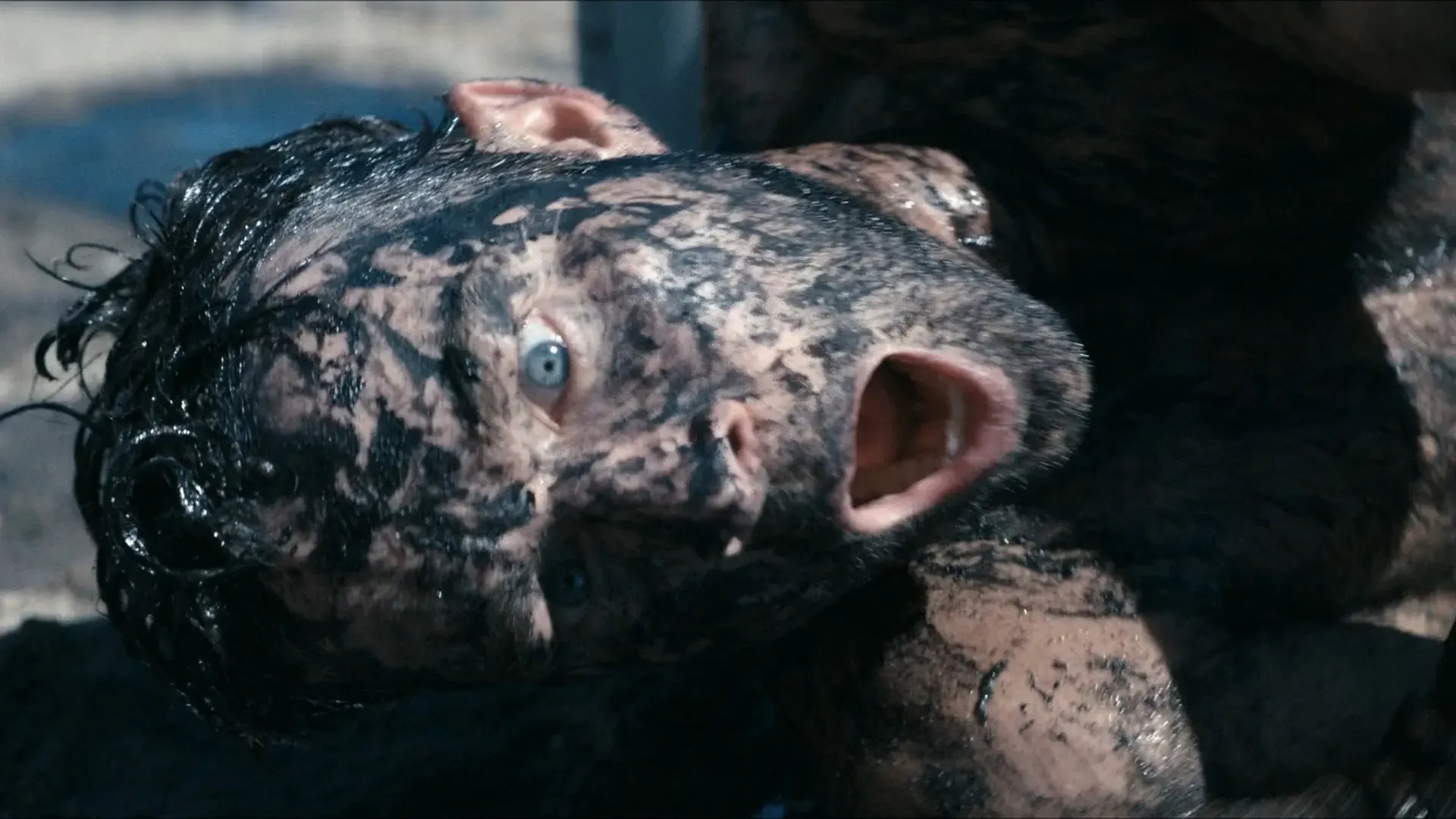
The only person immune to the toxoplasmosis turns out to be Frenchie, whose resistance is explained by years of heavy drug abuse. He is also the one who realises what is happening. The source of the infection is revealed to be Quinn — a Supe so overgrown with fungus that he is barely recognisable, and one of the same V1 test subjects as Soldier Boy. Frenchie deliberately pushes Soldier Boy to breaking point, causing him to obliterate Quinn with his energy blast. The aggression immediately subsides, and the group silently drives away like colleagues returning from an office party that went far too far, while the immortal "Mambo No. 5" plays in the background. There is no V1 left in the fort — or rather, someone has already taken it. Based on the clues left behind, Butcher and MM suspect it was Bombsight, Soldier Boy's former associate from the original V1 experimental team, who had long been presumed missing. Hughie raises the obvious question: why would Bombsight, who already has V1 in his bloodstream, need another dose? No answer is given yet — which naturally means the next episodes will revolve around precisely that mystery.
While the Boys are busy destroying both the fort and each other under the influence of the fungus, Homelander and Soldier Boy are settling their own issues in neighbouring rooms. The conversation eventually turns to Stormfront and both men admit they had romantic relationships with her. The atmosphere, already tense enough, suddenly becomes deeply uncomfortable. Soldier Boy locks Homelander inside a chamber filled with enriched uranium — instant death for an ordinary human being, but for Antony Starr's character, a slow agony and complete helplessness. The following scene is particularly telling: Butcher finds Homelander trapped inside and simply laughs at him, genuinely savouring the moment. That will undoubtedly come back to haunt him later. The final conversation between Homelander and Soldier Boy, which takes place after Quinn's death, is surprisingly subdued: Soldier Boy sits there crying and asks to be killed, while Homelander refuses.
When the script becomes more important than logic
The fourth episode's biggest problem is that it constantly feels written towards a predetermined outcome rather than around believable character behaviour. Homelander, who can hear heartbeats from miles away and see through walls, suddenly fails to notice The Boys screaming in adjacent rooms. Kimiko, capable of tearing people apart with ease, somehow cannot deal with Hughie and MM within seconds. Butcher is handed the perfect opportunity to kill Homelander while he is weakened by radiation — and simply does not take it, despite the fact that his entire motivation throughout the series has revolved around exactly that goal.
At this point, these are no longer minor genre conventions but systemic flaws within the series itself. The Boys increasingly operates according to the logic of individual scenes rather than that of a coherent world. It is as though every room in Fort Harmony functions as a separate video game level with its own rules, where characters can or cannot act depending entirely on whether the script is ready to progress. This is especially noticeable in the action scenes: Marvin gets shot, Hughie suffers severe cuts, yet moments later everyone behaves as though nothing has happened. The camera shakes violently, the editing tears apart the geography of the space, and the physics of superpowers operate selectively.
It also does not help that part of the episode very clearly functions as setup for Vought Rising, the upcoming prequel spin-off to The Boys. Soldier Boy, the experiments of the 1950s, the first generation of Supes, the origins of Vought — all of this is genuinely interesting on its own, but within the framework of the final season of The Boys, it creates a strange sense of narrative distraction. Rather than moving towards its climax, the show occasionally feels as though it is postponing its own ending in favour of future franchise projects.
Even Annie's storyline with her father, despite having a solid emotional foundation, is presented in an overly direct and drawn-out way. Her younger brother, poisoned by Vought propaganda, the policeman father living in fear, conversations about love being the reason to fight — all of it works conceptually on paper, but the execution feels so formulaic that it merely slows the episode's pacing. Ironically, the best part of this subplot is not the drama itself but the small details, such as the Dunkin' Donuts pastries that remind them of old family rituals. It is precisely in these tiny moments that the series still feels alive.
Incidentally, the episode also marks the return of The Worm — the Vought screenwriter and obvious self-insert for showrunner Eric Kripke. Through him, the series openly admits that ending long-running stories is difficult, pleasing everyone is impossible, and a final season comes with its own unique rules and risks. The meta-commentary works, but it does little to dispel the feeling that the story is treading water: V1 still has not been found, Ryan has run away once again, there is no meaningful progression in the central storyline, the team's internal conflicts continue to repeat themselves, and the final season increasingly behaves like a transitional bridge between franchises rather than the grand conclusion of its own story.
Final thoughts
The fourth episode leaves behind a conflicted impression. From a narrative standpoint, there are several genuinely compelling elements. The episode attempts to function simultaneously as a claustrophobic horror story, a political satire about an oppressed America controlled by a superhuman and Vought, a piece of meta-commentary, and another chapter in Homelander's psychological collapse. At times, it works remarkably well. More often, however, everything feels so artificial and mechanically scripted that the series begins to resemble a video game with invisible walls, where characters can only act when the writers allow them to. That is deeply disappointing — especially in a season where the stakes should have been the highest the show has ever seen.