The fifth episode of the final season of The Boys, titled "One-Shots", is the boldest in terms of structure this season. Instead of the usual intertwining parallel storylines, we are given several standalone mini-segments with their own protagonists and title cards, resembling comic-book one-shots. The series temporarily changes genre, transforming into a collection of short films in which each segment has its own tone, mood, and even genre emphasis. It is a daring creative decision, albeit not a flawless one in execution. Still, after several episodes that once again revolved around the familiar conflicts between Butcher, Hughie, and the rest of the team, this chapter suddenly restores the long-forgotten feeling of a living world — one inhabited not only by The Boys and the central conflict with Homelander, but also by other characters simply trying to live out moments of their own lives.
Those crushed by the system
Firecracker
The strongest segment of the episode — and one of the best in Season 5 overall — belongs to Firecracker. The episode opens with the proud unveiling of a new advertisement for the Democratic Church of America, where Homelander receives the first copy of "The Homelander Bible" from Firecracker herself: the Old, the New, and the Brand New American Testaments, the latter written entirely by artificial intelligence. Beneath Firecracker's outward fanaticism hides a living, conflicted person. Earlier in the day, she secretly meets with a mentor from her past — Reverend Greg Dupree — whose church is collapsing under pressure from the new religious order. Yet by evening, she is reading from a teleprompter on live television, accusing the same pastor of paedophilia. During the scene, the camera never leaves her face. The tears are real, and it is clearly tearing her apart internally.
Valorie Curry transforms what could have been a mere cog in the system into a person who simply lacked either the strength or the opportunity to find another way out. Firecracker's arc is the story of a minor screw in the machine, willing to swallow every ounce of filth in her path just to climb higher, all while completely losing her morality, the remnants of her humanity, and ultimately herself as an individual. That is precisely the point: she reached The Seven while being an utterly mediocre supe because it was never really about superpowers. Her rise and proximity to power came through servility, flattery, and manipulation rather than strength.
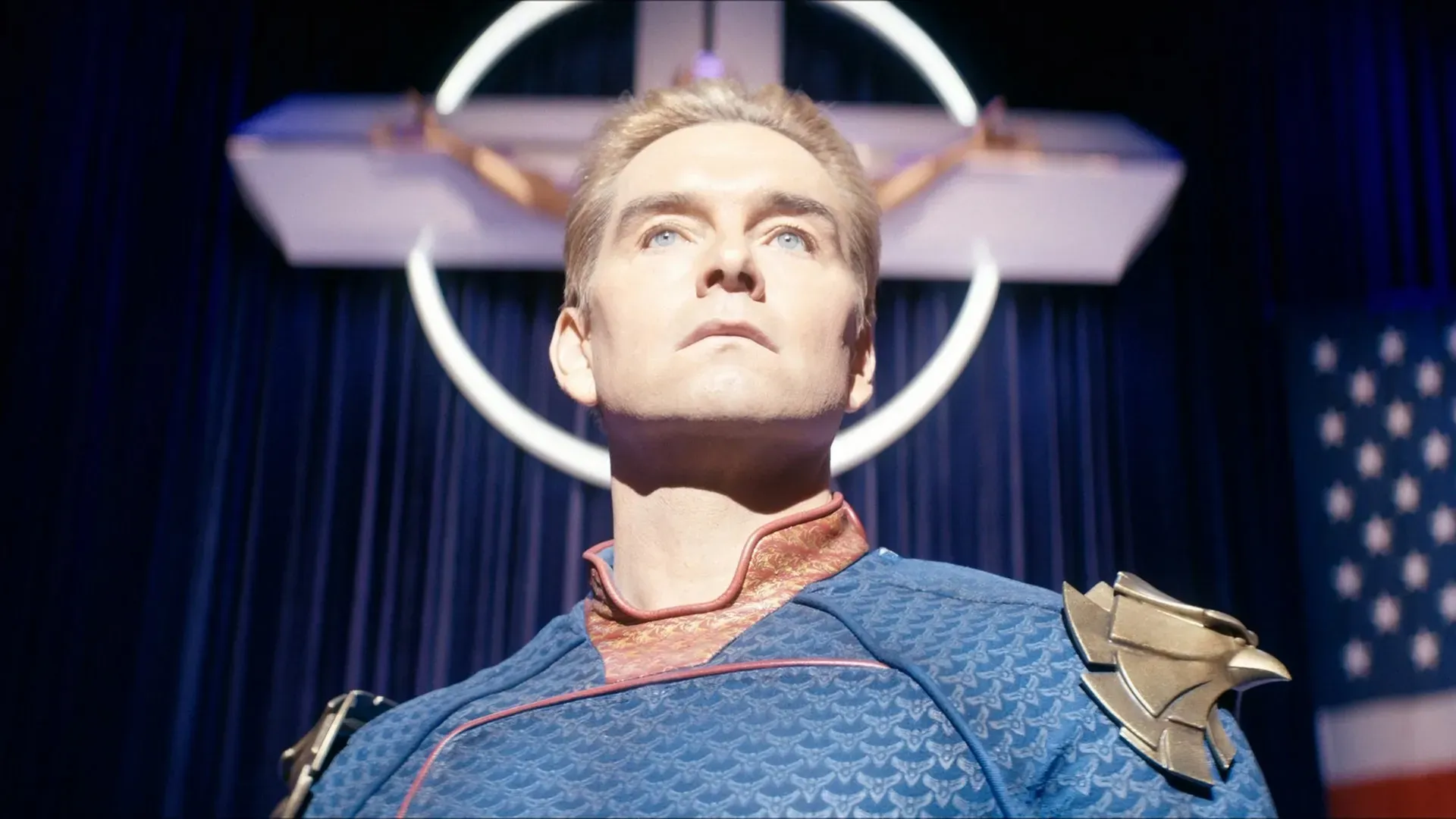
The final scene between Homelander and Firecracker concludes her storyline with chilling ruthlessness. He touches her face, there is a second of silence — and suddenly her head is impaled upon the eagle statue. Ironically, it is the bird's left wing, perhaps an additional symbolic jab at left-wing political ideologies centred on social equality, justice, and the reduction of inequality. A disgraceful end for Firecracker in her attempt to fly too close to the sun.
Should we feel sorry for her? In moments of doubt and inner conflict, perhaps some sympathy emerges. Yet she fully understood the bargain she made with her conscience and knew exactly what she had been doing all this time. Had Homelander not become so radically extreme in his beliefs and actions, would she even regret any of it? I do not think so. Up until now, we had seen how much she enjoyed her work, her influence, and the opportunities placed before her. Firecracker is a propagandist who actively enabled the horrors of the system and encouraged terrible things to happen. If it had not been her, it would have been somebody else — but that changes nothing.
Just draw a parallel with Russian propagandists who daily smear Ukrainians, spread fake narratives, distort reality, and justify every crime committed by Russia in its war of aggression against Ukraine. Or think of ordinary Russians who only by 2026 have slowly begun to realise that this is indeed a war and that consequences can also reach their own territory. Until then, only Russia's border regions had tasted the reality behind "Kyiv in three days". It was only after strikes on oil refineries caused rising fuel prices and shortages, alongside the inconveniences created by mobile network shutdowns and other measures introduced by the Kremlin following drone strikes deep inside Russian territory, that "ordinary" Russians increasingly began speaking about peace and ending the war.
And this is not some moral awakening regarding the terrorist actions of their state or their silent support of a bloody regime. It is simply the desire to return to comfort and stability. Firecracker's situation in The Boys is fundamentally similar. People are different, just as Russians are different, but the consequences of their actions — or inaction — are still forms of complicity. The severity of that complicity should be judged individually, both by society and by legal institutions.
Black Noir
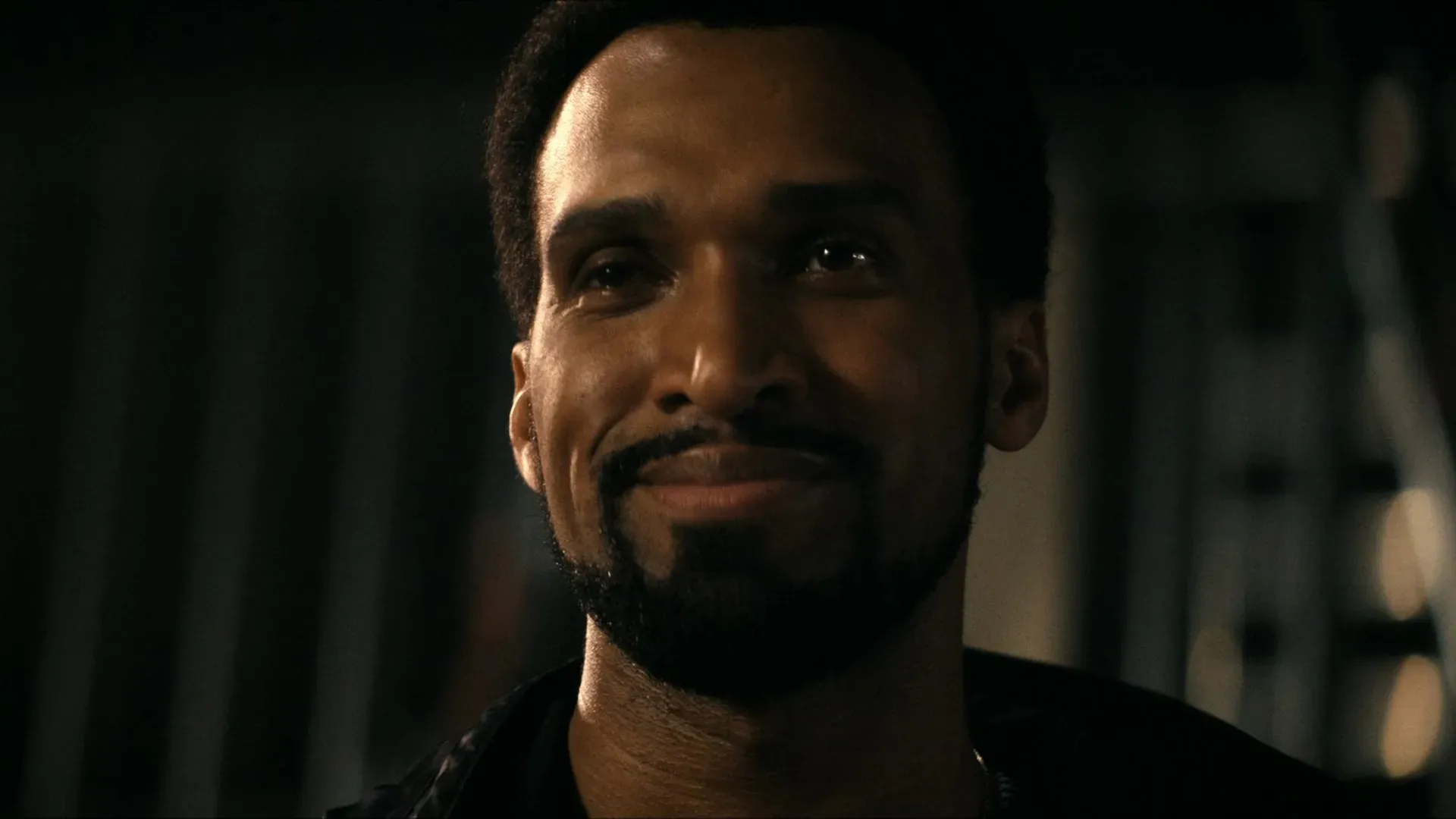
The second miniature centres on Black Noir II, Justin, who spends his free time rehearsing the role of Barry Gibb in a Broadway musical about the Bee Gees. Director Adam Bourke becomes the first genuine mentor to see him as an artist rather than just a mask. Considering how superficially the series had used the new Black Noir up to this point, it is remarkable that within ten minutes the episode gives the character more emotional weight than some full story arcs from previous seasons. His dream of theatre, the rehearsals, and his relationship with the director feel unexpectedly warm and human. These are precisely the moments when The Boys is traditionally at its strongest: when the creators stop trying to shock viewers with gore and instead simply allow the characters to be people. Of course, the show never forgets its trademark style, so a sewer eel murders Adam in the toilet on The Deep's orders. Justin finds his mentor dying in his arms, while Adam's final words parody the classic cinematic "last words before death" cliché. The scene is absurd, yet strangely sincere at the same time. In the end, after being blackmailed by The Deep, Black Noir is forced to put the mask back on. It is genuinely sad.
Terror
The third segment follows The Boys through the perspective of Terror, Butcher's bulldog. While the dog searches for his toy — which Starlight has taken to be washed — we witness a series of deeply honest conversations. Marvin confesses to Butcher that he has accepted his inevitable death and, for the first time in a long while, can finally sleep peacefully. Frenchie openly admits that he has no idea how to give Kimiko a normal life. Most importantly, Butcher promises Hughie that if they find V1, part of the dose will go to Starlight and Kimiko, while he himself has no intention of saving his own life. Anthony Starr delivers another excellent display of self-irony during Terror's dream sequence. Meanwhile, the moment Butcher watches Hughie save Terror from chocolate poisoning says more about the character than any of his grand speeches ever could.
In this segment, the writers finally deliver something the season had previously lacked: genuine character interaction without endlessly repeating the same conflicts. Butcher's conversations with Hughie and Marvin work far better here than their constant arguments in earlier episodes. This is especially true because the writers finally allow Butcher to reveal remnants of his humanity once again. Yet this is also where the show works against itself. The problem is that the ending of Season 4 effectively completed Butcher's arc as a man who had fully sacrificed his humanity in pursuit of war against supes. The darkness had won — or at least that was how it was framed. Season 5 partially walks that back. Yes, he remains cynical, brutal, and willing to sacrifice others, but once again the series insists that "the old Butcher" still exists somewhere beneath the surface. By allowing V1 to be used for Starlight and Kimiko, he effectively admits he is not prepared to condemn his team entirely. And so the show returns to a familiar dynamic once again: Butcher is still a bastard, but one with a soul. The issue is simply that The Boys keeps repeating this same arc season after season.
The same applies to Hughie. The characters feel trapped in a kind of emotional rat race, endlessly circling back to the same beats. That is precisely why the experimental structure of this episode works better than the season's main narrative: it at least allows the characters to behave like living people rather than figures doomed to endlessly recycle their trauma.
Sister Sage
In the fourth short segment, Sister Sage reveals her master plan to Ashley. If earlier episodes left room to interpret her merely as a pragmatic manipulator, it now becomes clear that her plan essentially revolves around helping Homelander seize power, unleashing the anti-supe virus afterwards, allowing humanity and supes to destroy one another, and then waiting out the apocalypse in a bunker surrounded by books. The irony is that she had already been living exactly this way before meeting Homelander — only then it was a flat instead of a bunker. In some ways, she has overcomplicated things entirely. A character who supposedly despises chaos becomes the architect of the end of the world simply because she has grown tired of people.
Questions of logic
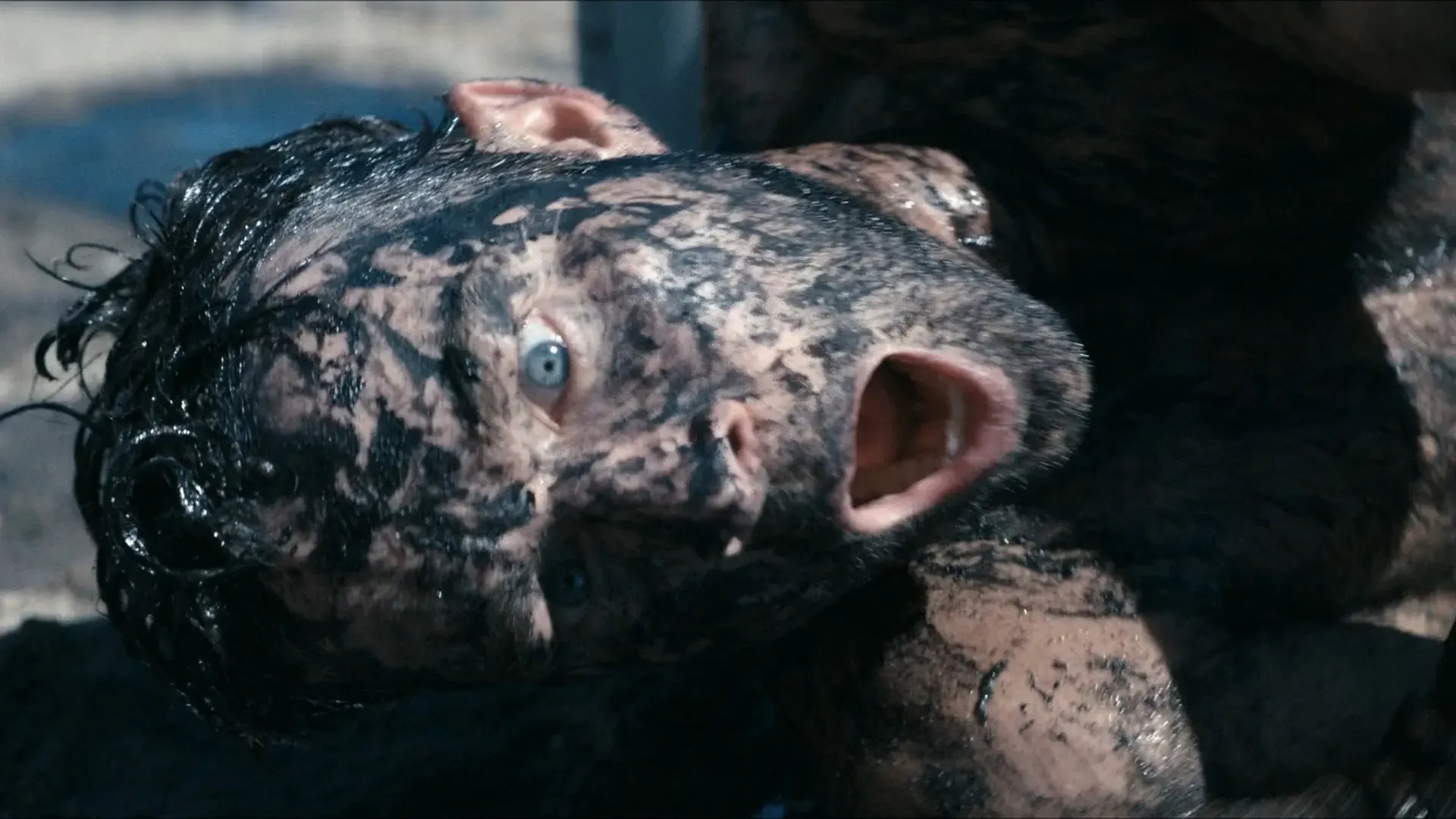
The final part of the episode unfolds in Los Angeles, where Soldier Boy and Homelander travel to meet Mr. Marathon, a former member of The Seven who was eventually replaced by the faster speedster A-Train. The segment reunites Jensen Ackles (Soldier Boy), Jared Padalecki (Mr. Marathon), and Misha Collins (Malchemical), functioning as a delightful meta-reference for fans of Supernatural, whose best seasons were also created and run by Eric Kripke, the man behind The Boys. The episode itself is directed by Philip Sgriccia, who directed numerous Supernatural episodes as well.
Waiting for the protagonists in the mansion are Seth Rogen, Kumail Nanjiani, Will Forte, Christopher Mintz-Plasse, and Craig Robinson, all playing exaggerated versions of themselves. At first their appearances are amusing, then the entire sequence becomes increasingly absurd before eventually descending into complete blood-soaked chaos. Their cameos feel like a blend of This Is the End and Superbad, only with supes and the trademark brutality of The Boys.
After the failed attempt to poison Homelander and the chaos that follows, the greatest problem of modern-day The Boys becomes obvious: the show increasingly struggles with the internal logic of its own world. Mr. Marathon, a character capable of super-speed, suddenly behaves as though rooms need to "load in" like a video game. As a result, his chase after Soldier Boy resembles Wile E. Coyote pursuing the Road Runner from the Looney Tunes and Merrie Melodies shorts, culminating in the speedster slipping on baby oil.
Homelander deserves special mention as well, because with each season he becomes easier and easier to defeat. In Season 1, he represented an absolute threat, forcing The Boys to calculate every move simply to survive. Now, however, his unstable psyche, god complex, and overwhelming arrogance repeatedly sabotage him. He rarely uses his super-hearing, X-ray vision, or super-speed effectively, and as a result the danger he poses feels increasingly conditional. This does not ruin the series, but it noticeably lowers the stakes compared with the earlier seasons. More and more often, it feels as though a handful of powerful supes could simply overwhelm him together without any need for viruses or elaborate plans.
Final thoughts
Even despite these issues, "One-Shots" remains one of the best episodes of the season so far. Not because it is flawless, but because for the first time in a long while, The Boys stops mechanically pushing the story towards its finale and simply allows its world to breathe.